





Aerospace –
structural and fairing components for aviation. Every kilogram saved translates directly into range, payload and operating costs. At the same time, high demands apply to traceability, process documentation and reproducible quality across the entire series.
Defense –
components and assemblies for defense applications. Alongside the weight advantage, mechanical resilience, protection against environmental influences and robust series capability come to the fore.

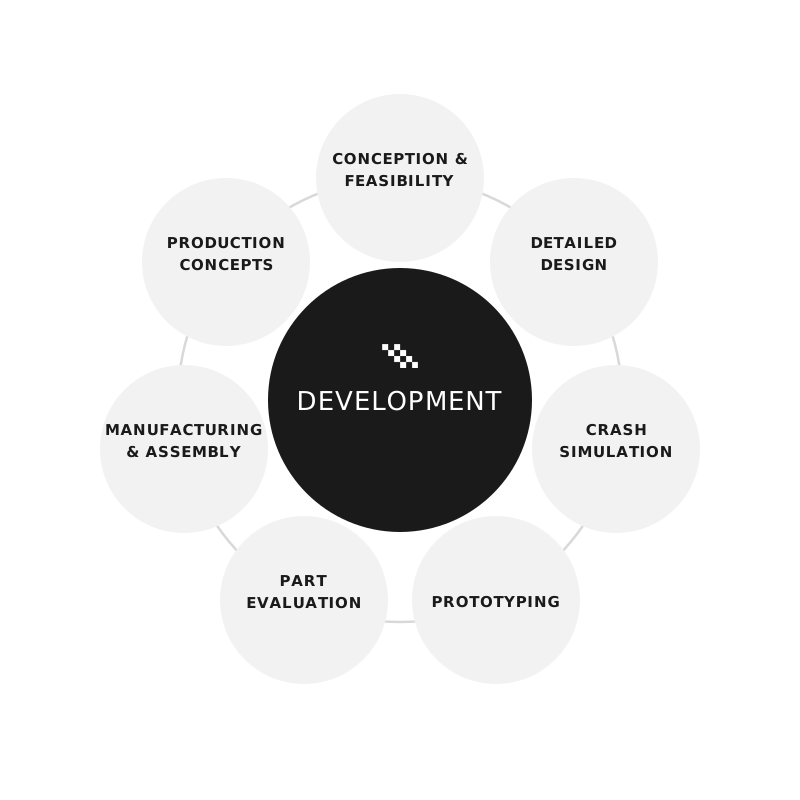
- Conception and Feasibility Study Developing lightweight solutions and concepts with composite materials and in combination with metals
- Detailed Design Detailed part design based on the feasibility study, taking specific processing requirements into account
- Crash Simulation Complex dynamic simulations with fibre reinforced plastics
- Prototyping Design of prototype tooling and production of prototypes close to serial parts
- Part Evaluation Design of testing equipment, evaluation of prototypes against the requirement profile, verification of simulation results
- Production Concepts Design of production concepts in close cooperation with manufacturing
- Part Manufacturing and Assembly Parts in glass or carbon composite, using autoclave or press technology